Who was the first person who ever believed in you?
We all have stories of people who’ve inspired, motivated, and given us that little push when needed. But today, I want to share a slightly different story with you. A story of self-belief, resilience, and a sprinkle of stubbornness. This is the story of the first person who believed in me as a writer.
Spoiler alert: it was me!
Now, don’t get me wrong, external validation is great. A pat on the back, a compliment, or even a simple “I loved what you wrote” can work wonders. But before any of those words of affirmation came my way, I had to face the blank page with just one person cheering me on – and yep, you guessed it, that person was yours truly.
What’s the biggest problem you have in your writing right now?
As I sit down to write this blog post, I can’t help but feel a mixture of emotions. The journey I’ve been on, grappling with a problem that seemed insurmountable, has been both challenging and enlightening. You see, the biggest problem in my writing right now is actually writing itself. It’s not a lack of ideas, nor a shortage of creativity – it’s something much deeper that I’ve had to confront head-on: writer’s block born from years of toxicity and emotional abuse.
What is your favorite icebreaker (meetings, parties, dates, socials)?
Meeting someone new in a romantic context can be both thrilling and nerve-wracking. The first moments of interaction often set the tone for the entire relationship. I want to share my favorite icebreaker when meeting a potential love interest. Whether at meetings, parties, dates, or social gatherings, this approach has consistently helped me connect on a deeper level and create memorable experiences. Did it help me find my Mr. Forever? No, but it did help me find my Mr. 31-Year Marriage. So, let’s check it out.
Before delving into the specific icebreaker, it’s crucial to understand the underlying philosophy: authenticity. Being genuine and authentic to yourself is the key to forming a meaningful connection. People can sense when someone is sincere, creating a foundation of trust and comfort right from the start.
What is your author origin story? (Or make one up.)
Every writer has a unique origin story, a tale of how they discovered their passion for penning stories and the winding path that led them to become an author. Today, I am thrilled to share my author’s origin story—a journey filled with inspiration, challenges, and unwavering determination.
As far back as I can remember, I was captivated by stories. Bedtime tales, fables, and books opened doors to enchanting worlds, stirring my imagination and filling my young mind with endless possibilities. The magic of words weaved by authors had me daydreaming about becoming one myself, with aspirations of conjuring my own realms of wonder and intrigue.
A field full of sunflowers on a bright morning? Or rolling hills on a clear full moon night?
No matter the scene we choose, one thing is for sure – life can be beautiful. Even amid struggle and pain, moments of joy can still be found if you take the time to appreciate them.
The impact of nature on a person’s mood, health, and overall well-being is profound and well-documented. Spending time in natural environments, whether lush forests, tranquil beaches, or serene parks, offers many benefits that nurture both the body and mind.
I was raised in a large family of four kids, so needless to say (but I’m going to anyway), the battle over pizza toppings remained a stable part of Friday night eating. My mother’s children had an expanse of tastes that made it necessary for her to have each of us take weekly turns to decide what would go on top of the tomato and cheesy goodness. When it was my turn, my brothers and sister groaned and complained to Ma that she was wasting a chance to have something new and different on pizza night.
Write about a metaphor you used in one of your books. What does it represent?
Metaphors can be a valuable literary device to integrate symbolism in their works that will activate readers’ imaginations and offer them a different way. By directly comparing two different things, authors can give qualities to the first thing through the use of the second. In this way, writers can “show” instead of “tell” important aspects of a story or character as well as convey an underlying message through the thematic use of a metaphor throughout the plot.
What character have you created that you despise/hate the most?
When I write, I try to give a story’s antagonist some depth and humanity. One way I do this is by making them the protagonist of their own plot, allowing them to justify anything they do to the book’s antagonist(s).
Hey, romance addicts. Another week, another thought-provoking blog hop post. Let’s take a look at what we have this week.
Do you write diverse characters? If so, how do you avoid cultural insensitivity?
It’s interesting that this week’s blog hop question asks about diversity in writing. I spent the weekend fielding questions on social media, from white authors about including diverse characters in their books. It’s also ironic that the blog hop posing the question is not very diverse. As far as I know, I am the only contributing blogger who is identifies as BIPOC (Black, Indigenous, People of Color). No, Italians and the Irish do not count. Let’s not go there. Anyway, onto my answer.
Of course, I write diverse books. just look at my covers.
As an author who identifies with multiple marginalized social intersections, I write to purposefully highlight a range of backgrounds and experiences in my characters. I think diversity is a stable part of literary expression for many BIPOC authors and that the main group challenged to understand the importance of diversity—and how to integrate into their work—is white authors.
Attempts to expand diversity in literature seem to present as a challenge and threat for authors who need to develop a greater appreciation for diverse literature and resist the cultural messaging that centers on whiteness.
Hey, romance addicts. I hope everyone is having a fabulous week and is geared up for the weekend! I am geared up for this week’s Open Book blog hop post. Let’s check it out.
What do you wish you had an unlimited supply of?
Hmm.
A nice, theoretical question is the perfect way to end the week. We live in a world filled with limitations. Our world is shaped by boundaries, which ensure that there is a constant balance of imbalance. I could not think of one thing of which I would not like unlimited anything, because it would only exacerbate my inability to escape the constraints of my existence. I don’t want to seem pessimistic–well, maybe a little–but bear with me.
Do you have a favorite piece of literature? What is it and why is it your favorite?
Hey, romance addicts. I know it’s been a while since I’ve written a blog hop post, but I couldn’t get in front of the camera to do a video. So, I’m getting back to basics and doing what I do best, writing. Let’s do this!
I don’t have one favorite piece of literature. The literary world is far too expansive to settle on one text. However, some books that influenced and inspired me come to mind.
What do you owe the real people upon whom you base your characters?
I may (or may not—I admit to nothing) base a character on someone I respect or despise, so I will have to be salty and sweet with the response to this week’s OpenBook blog hop post. Let’s start with the people I like.
Sweet
I’ve explained in a Black Glue Podcast interview how the Prophet Muhammad served as inspiration for the male characters featured in the Brothers in Law series.
I reflected on the Prophet (Muhammad’s) life and how he was as a husband … lover … someone out in the community and how he transitioned between those things. What he did when his women were mad at him, and what he did when his women were acting out. [The brothers in law] don’t act exactly like the Prophet, but there are characteristics each one of them has.
Simon is the one who keeps things at a level where it doesn’t get too bad. He doesn’t allow things to get to him as much. Marcus is the alpha, alpha. He’s the leader. He expects things to happen the way he needs for them to happen because he’s progressing the nation. Adam is that inner reflection.
I find it interesting that this week’s question uses the word “look” when it comes to literary success because I have a visual representation of it for me.
Let me give a little backstory. I love Zumba. It is one of the ways I get to release pent up tension and clear my head. I’m usually all over the floor during class, wiggling my hips and shouting as I cheerlead people to go higher and have fun.
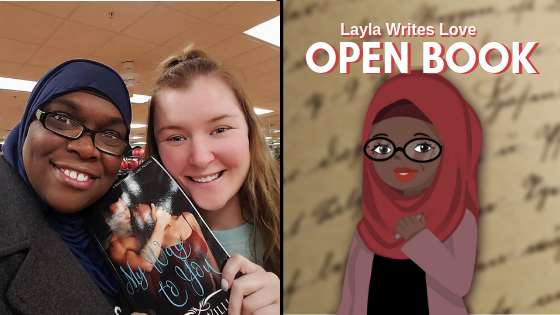
Anyway, last week, one of my zeeps (Zumba+peeps) had mentioned that she wanted to read My Way to You, my first book in the Brothers in Law series. Like most indie authors, I had a copy. You gotta know how to play the game.
I signed and handed it to her. This week, she tapped me on the shoulder between songs, saying she needed more copies of the book. Word?! She explains what happened in the video below.
What kind of research do you do, and how long do you spend researching before beginning a book?
I spend a lot of time researching all kinds of things for various writing projects. I need to research curriculum development and pedagogical methods for my work with the Muslim Anti-Racism Collaborative. I just spent the past few days hitting Google for historical and cultural research while taking part in an anti-racism workshop.
My job teaching at the college and romance scholarship also requires time researching. Before leaving for Chicago, I looked for additional sources as I edited an essay about African American Muslim romance fiction (yes, it’s a thing) and how female protagonists are othered. It is interesting how Muslim authors use the other woman trope in love triangles.
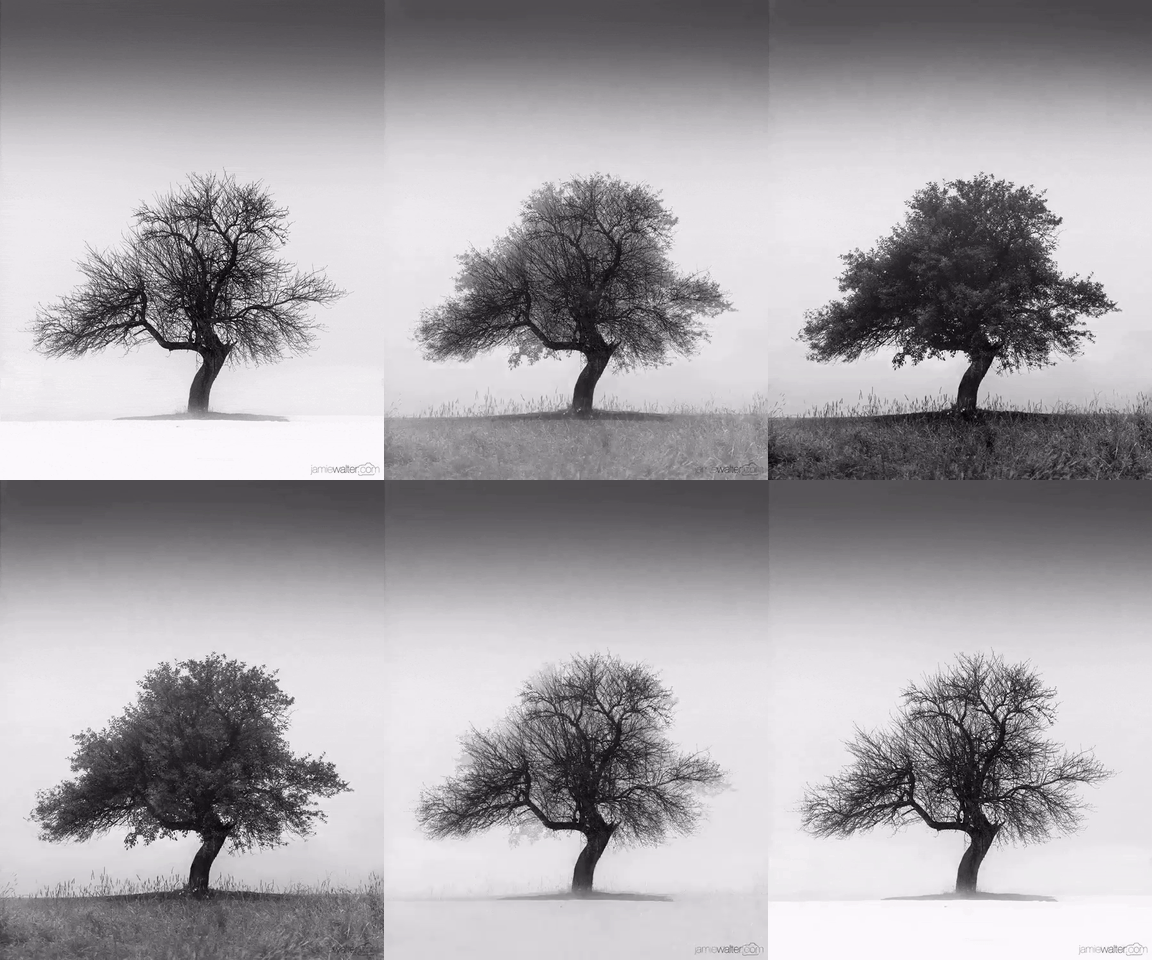
Do your stories and worlds reference seasons and do they play into the plots of your books?
Seasons provide important time elements to a story’s plot. The environment in which characters interact is significant in setting the tone and helping readers keep track of how much time has passed between plot points.
Time passage within a novel can be large (days, months, and years) or small (a few moments or minutes), and all of it can affect the story’s pacing, grabbing readers’ attention or losing it. A lot of my novels involve events requiring longs periods of time to pass from the book’s beginning to the end.
Writing is a process rich with possibilities for errors. Anyone taking to the pen and pad or keyboard to share their stories and experiences with the world will inevitably trip, fall, get crushed, or end up a blubbering puddle of frustrations and regrets.
Count on all the above because our humanness makes it inevitable. Things will get messy just like us.
I spent years as a writing coach at a four-year college, where I saw students making the same mistakes and helped them hone their skills. When I ventured into professional writing as a freelancer, the easy transition from academic writing surprised me. I became popular with some online Muslim publications (I only write for them for personal reasons) and launched a cultural platform. Save for a few shifts in tone, I had it easy.
I didn’t encounter many bumps in the road of my journey as a writer until I wrote a novel. My strong writing background did not secure me from making some newbie mistakes, and I found many other authors who expressed that they made them.
What was an early experience when you learned that language had power?
I think humans have an innate appreciation for the power contained in language. We have a need to communicate from the moment we leave the womb. Crying, whimpering, whining and cooing are all methods that infants have to convey their feelings and desires.
It can be so strong that many mothers and primary caregivers learn the meanings behind each utterance coming from the tiny person, finding it almost impossible to ignore. The impact of our children’s infant cries frazzled each one of my nerves, motivating me to satisfy or wreak havoc on whatever or whoever was upsetting them. People didn’t start calling me Mama Bear for nothing.
Yeah, kinda like that. So, knowledge about the power of language is something intrinsic. We know its influence on those around us. When people are past the infancy, “cry to get what I want stage”, it is important to recognize how compelling words can be on one’s mindset and those around them, especially words strategically used to convince, inspire, anger and degrade—some of which may become branded in one’s psyche, influencing their internal dialogue and actions. Continue reading “Pens, Knives, and Guns: The Power of Crafting Words”→
From all the characters you’ve created, which is your favorite and why?
What kind of f—
Okay, I smell a setup. My kids tried asking me something like this. It didn’t work then either. Which one of my characters got you? Was it Raad?
It was Raad. He’s so narcissistic. It’s bad enough he wrecked my concentration until I got his characterization finished. Now, he’s gotta try to force some sick confession out of me? Sit your butt down, Raad, and wait for me to release Building on Broken Dreams to show your…self to the world.
Have you ever made yourself cry (over what you did to a character) while writing a book?
I try to make my characters as realistic as possible—a difficult feat in romance. It’s too easy to fall into romanticizing (pun intended) even the flaws of a character, especially the two main protagonists.


 #open book
 #OpenBook


 #OpenBook
 #OpenBook
 #OpenBook





 Lyndell Williams